For most San Diego homeowners, capped composite (Trex, TimberTech, AZEK) is the best all-around decking material. It shrugs off coastal sun, never needs staining, and lasts 25 to 50 years. Redwood and cedar suit homeowners who want real wood grain, IPE is the hardwood that outlives the house, and aluminum wins in wildfire zones. The right board comes down to your budget, how close you sit to the ocean, and how much weekend upkeep you will accept.
Composite: The Low-Maintenance Default
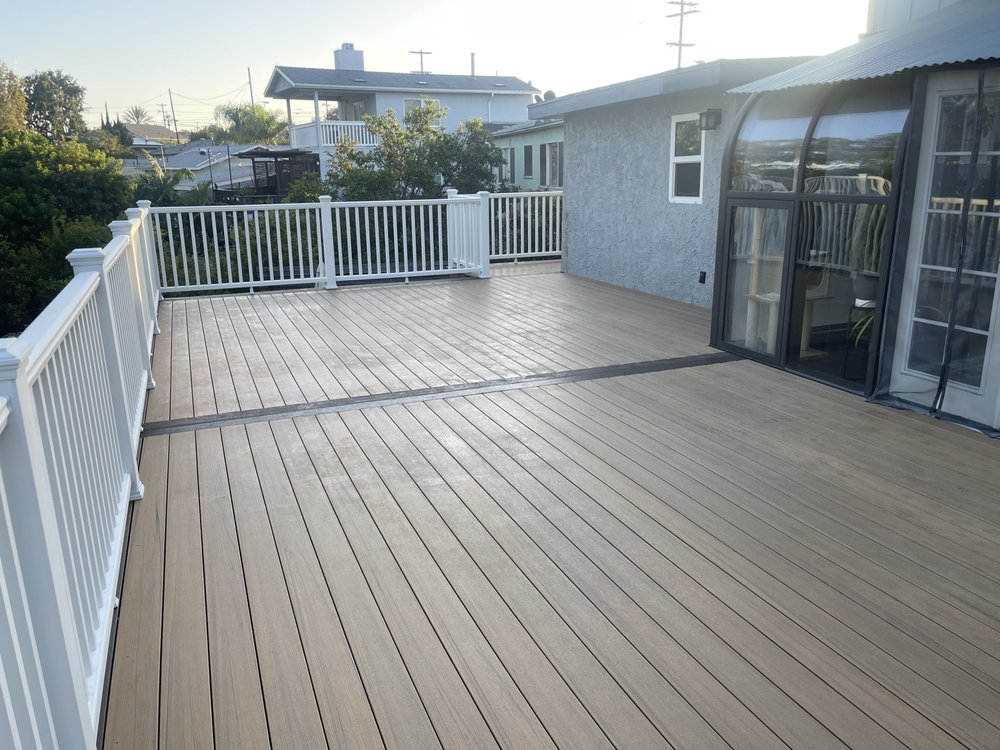
Composite decking is a wood-plastic blend wrapped in a hard polymer cap. That cap does the work in San Diego: it resists fading, staining, mold and rot, and it cleans with soap, water and a soft brush. No sanding, no sealing, no annual color coat. Trex and TimberTech are the two names most homeowners here pick, and both back their premium lines with 25 to 30-year fade-and-stain warranties. Materials run $30 to $60 per square foot depending on the collection.
Trex builds its boards from roughly 95 percent recycled content, with grain patterns from gray driftwood to warm tropical tones. TimberTech splits its range between wood-composite and all-PVC lines, so you can start with a mid-priced board and step up to solid PVC on the same deck frame. Both hide fasteners with clips for a clean, screw-free surface. Darker boards absorb more afternoon heat, so pick a mid-tone in full-sun yards in Poway, Santee or El Cajon where inland temperatures climb.
AZEK and PVC: Best Near Water and the Coast
AZEK and other PVC decking are 100 percent plastic, with no wood fiber anywhere in the board. That single fact is why they beat everything else within a mile of the ocean. Salt air, pool splash, sprinkler overspray and damp marine-layer mornings have nothing organic to attack, so the boards never swell, rot or grow mold at the seams. They run cooler underfoot than dark composite, and AZEK's cool-technology capstock reflects heat so bare feet stay comfortable around a pool. Budget $40 to $70 per square foot.
For a Coronado bayfront deck, a La Jolla home in the salt spray, or any pool deck in Del Mar or Carlsbad, PVC is the safe long-term call. It carries the longest fade warranties in the industry, up to 50 years on some AZEK lines, and it shrugs off the chlorine and sunscreen that stain lesser boards.
Redwood and Cedar: Real Wood, Real Character
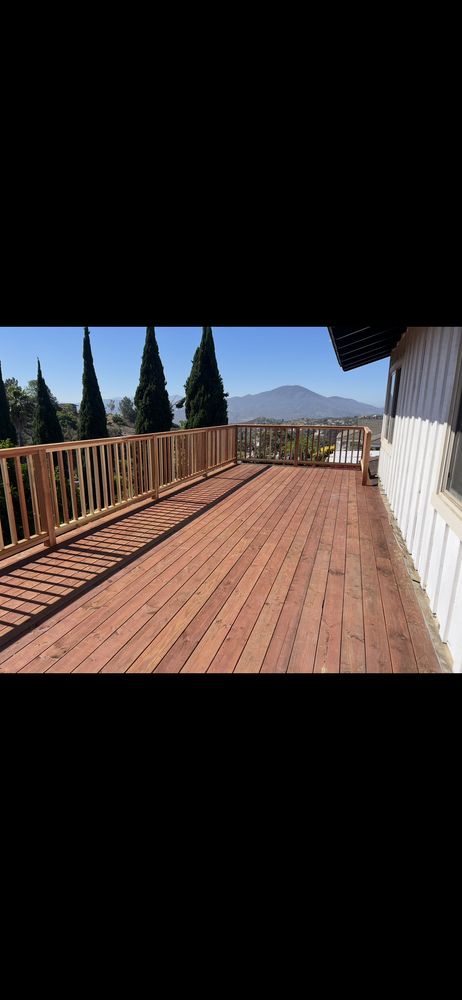
Nothing matches the look and smell of real wood, and redwood and cedar are the two softwoods that belong on a San Diego deck. Both carry natural tannins and oils that resist rot and insects without chemical treatment, and both take stain beautifully. Redwood offers deeper red-brown tones and tighter grain; cedar runs lighter with a warmer amber cast. Expect $30 to $50 per square foot for either.
The trade is upkeep. Left bare, both silver to gray within a year under coastal UV. To hold their color you clean and re-stain every 2 to 3 years, sooner on south- and west-facing decks that take full sun. Plan on 15 to 25 years of life with that care. Redwood and cedar suit character homes in Kensington, South Park and North Park where a natural deck matches the architecture.
IPE: The Hardwood That Lasts Decades
IPE (Brazilian walnut) is one of the densest woods on earth, so hard it dulls saw blades and sinks in water. It resists fire, rot, scratches and termites without treatment and carries a natural Class A flame rating, which matters in fire country. A well-built IPE deck lasts 40-plus years, longer than the house around it. Materials land at $40 to $70 per square foot, on par with premium PVC.
The catch is weight and upkeep. IPE is heavy, hard to cut, and needs a specialized crew to fasten it right. Left alone it weathers to a soft gray; to keep the deep espresso-brown you oil it once or twice a year. For homeowners in La Jolla or Point Loma who want a real-wood hardwood deck that never gets replaced, nothing else compares.
Pressure-Treated Pine: The Budget Starting Point
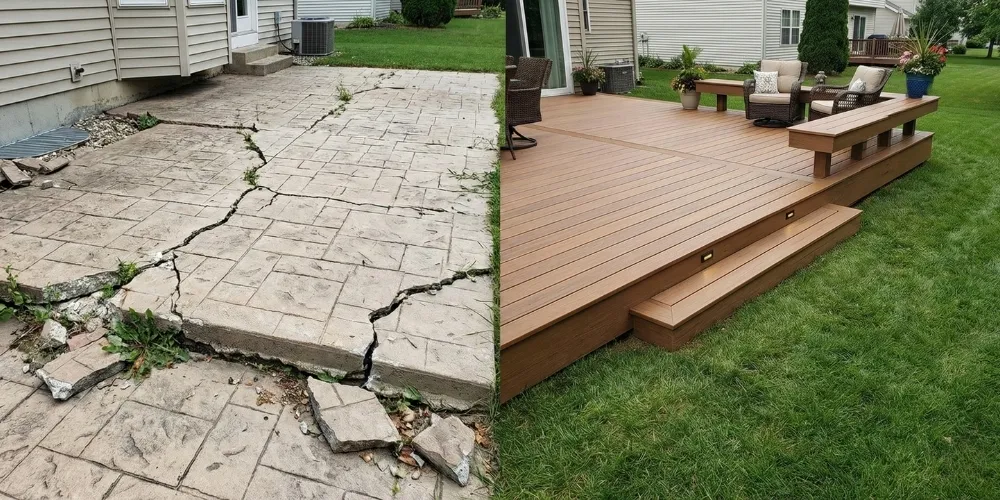
Pressure-treated pine is the cheapest way to get a deck underfoot, at $15 to $25 per square foot for materials. Chemical treatment protects it against rot and termites, and it takes paint or stain well. The downside is movement: PT lumber warps, cracks and checks as it dries, and it needs cleaning and re-sealing every 1 to 2 years to reach its 15 to 20-year lifespan. Many San Diego homeowners use it as a starter deck now and upgrade the surface to composite later on the same frame.
Aluminum: Waterproof, Fireproof, Forever
Aluminum decking is the specialist. Powder-coated aluminum planks are fully waterproof, non-combustible, rust-proof and lightweight, with interlocking boards that channel water off the surface. That makes aluminum the top pick for a dry space under an elevated deck, a rooftop deck, or a home deep in a wildfire zone where a non-combustible surface is required. It never rots, warps or burns and carries lifetime or limited-lifetime warranties. It costs more than composite and wears a cooler, more industrial look, but for fire zones and second-story decks over living space, nothing else does the job as cleanly.
Decking Materials Compared at a Glance
| Material | Cost / sq ft | Lifespan | Maintenance | Best for |
|---|---|---|---|---|
| Composite (Trex, TimberTech) | $30–60 | 25–50 yrs | Wash only | Low-maintenance all-rounder |
| AZEK / PVC | $40–70 | 30–50 yrs | Wash only | Coast, pools, salt air |
| Redwood | $30–50 | 15–25 yrs | Re-stain every 2–3 yrs | Natural red-brown wood look |
| Cedar | $30–50 | 15–25 yrs | Re-stain every 2–3 yrs | Warm, lightweight softwood |
| IPE hardwood | $40–70 | 40+ yrs | Oil 1–2x / yr | Longest-lived real wood |
| Pressure-treated | $15–25 | 15–20 yrs | Seal every 1–2 yrs | Tight budgets, starter decks |
| Aluminum | Premium | Lifetime | Wash only | Fire zones, rooftop, waterproof |
How San Diego's Climate Shapes the Choice
San Diego is really a dozen micro-climates, and where your home sits should steer the board you buy.
- Coastal salt air (La Jolla, Coronado, Point Loma, Del Mar): salt corrodes metal and swells wood. PVC and AZEK win, and stainless fasteners are a must on any material.
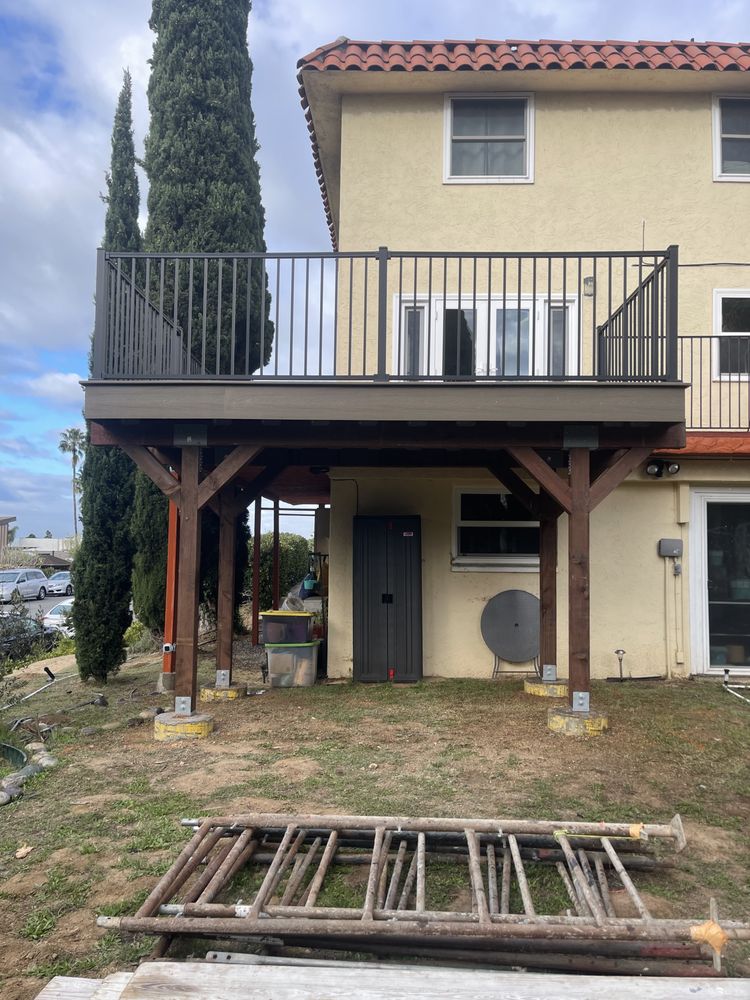
- Canyon and hillside exposure (Mission Hills, Encinitas, Scripps Ranch): elevated decks catch wind-driven rain and marine-layer damp. Composite and PVC handle the constant moisture; protect any wood posts near the ground.
- Pool decks (Poway, Carlsbad, Rancho Bernardo): chlorine, splash and bare feet call for cool, waterproof PVC or a light-toned composite.
- Wildfire (WUI) zones (Ramona, Alpine, back-country Poway): the state requires ignition-resistant surfaces. Aluminum, IPE, and Class A-rated composite and PVC boards qualify; bare pine does not.
- Full-sun inland yards (El Cajon, Santee, Escondido): heat is the enemy underfoot. Skip the darkest boards and choose mid-tone composite or heat-reflective AZEK.
How to Choose by Priority
Pick the one thing that matters most, then match the board to it.
- On a tight budget? Pressure-treated pine now, upgrade the surface to composite later.
- Want zero upkeep? Capped composite or AZEK/PVC — wash and forget.
- Love a natural wood look? Redwood or cedar, and accept the every-2-to-3-year re-stain.
- Want the longest life at any price? IPE hardwood or aluminum.
- Near a pool or the coast? AZEK or PVC, every time.
- In a fire (WUI) zone? Aluminum, IPE, or a Class A-rated composite or PVC board.
Warranty Comparison
A warranty is the clearest signal of how long a maker expects its board to last, and manufactured decking wins here by a wide margin.
- Trex: 25-year limited residential fade-and-stain warranty on capped lines.
- TimberTech: 30-year fade-and-stain on premium composite, up to 50 years on solid PVC.
- AZEK / PVC: up to 50-year limited fade-and-stain, the longest in decking.
- Aluminum: limited-lifetime structural and finish coverage.
- IPE, redwood, cedar, pressure-treated: no manufacturer surface warranty, so lifespan depends entirely on upkeep.
Maintenance Expectations
The real cost of a deck shows up over the years you own it, not the week it goes in. Here is what each surface asks of you in San Diego's climate.
- Composite, PVC, aluminum: a rinse and a soap-and-water scrub twice a year. No sanding, staining or sealing, ever.
- Redwood and cedar: clean and re-stain or seal every 2 to 3 years to hold color and block UV.
- IPE: oil once or twice a year for the brown tone, or let it silver to gray for free.
- Pressure-treated: clean and re-seal every 1 to 2 years, and replace warped or split boards as they show up.
Material choice is the biggest line item in your budget, and it decides whether a tired deck is worth saving. See how it plays out in our San Diego deck cost guide, weigh a fix against a rebuild in deck repair vs. replace, and check whether your project needs a San Diego deck permit before you start. Still torn between two boards? Our San Diego deck builders can walk your lot and show you samples in your own light.
Quick Answers
What is the most low-maintenance decking?
Capped composite and PVC are the lowest-maintenance decking, needing no staining, sealing or sanding, just an occasional wash. Wood always needs periodic refinishing.
Does composite decking get too hot in San Diego sun?
Lighter composite and AZEK boards stay reasonably cool, while very dark boards get warm in direct afternoon sun. AZEK cool-technology lines are the coolest underfoot, which is why they are the pick for pool decks in Poway and Carlsbad.
Is composite better than redwood for a San Diego deck?
Yes, composite beats redwood for most San Diego homeowners on maintenance and lifespan. Composite needs only a wash and lasts 25 to 50 years, while redwood needs re-staining every 2 to 3 years and lasts 15 to 25. Redwood still wins if you want real wood grain and accept the upkeep.
What decking holds up best to coastal salt air?
PVC and AZEK hold up best to coastal salt air because they contain no wood fiber for salt and moisture to attack. For homes in La Jolla, Coronado, Point Loma and Del Mar, pair PVC boards with stainless fasteners so nothing corrodes over time.
Is composite decking allowed in San Diego wildfire zones?
Yes, Class A fire-rated composite and PVC boards are allowed in San Diego WUI zones, along with aluminum and IPE. Bare pressure-treated pine does not meet the ignition-resistant requirement, so check the board's fire rating before you buy in Ramona, Alpine or back-country Poway.
How long does a deck last in San Diego?
Composite lasts 25 to 50 years and wood lasts 15 to 25 years in San Diego's mild climate. Aluminum and IPE run longest at 40-plus years to a lifetime, while pressure-treated pine sits at the short end at 15 to 20 years.
Skip the estimates online. We measure and price your project for free.
Get a Free Estimate