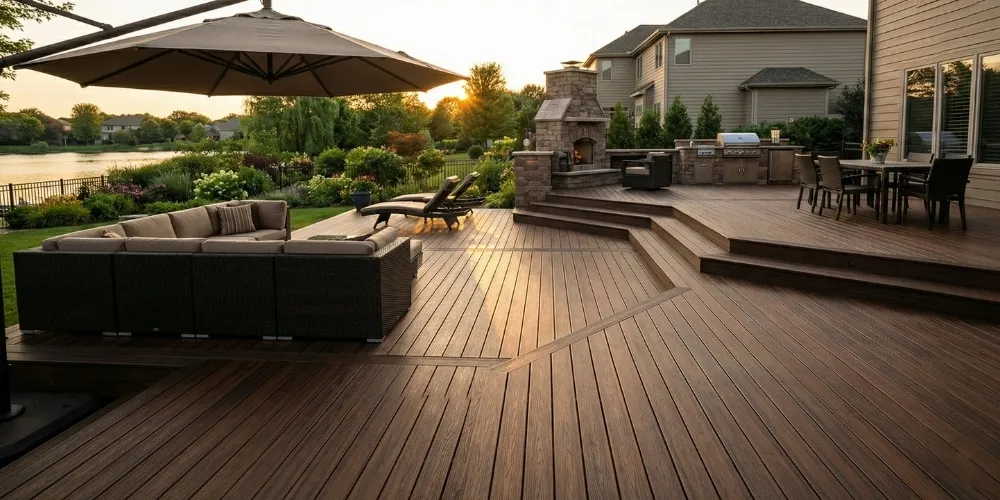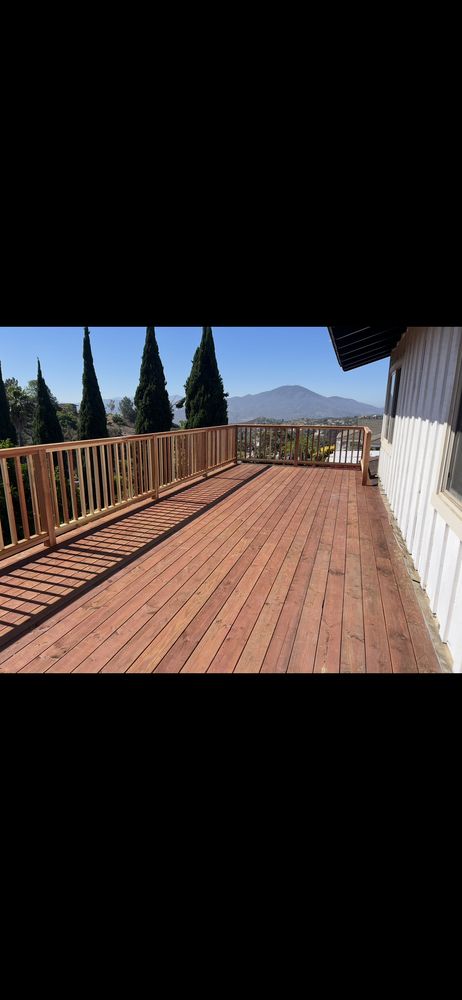
The single most important thing about how to choose a deck builder is proof: a verifiable California CSLB license, current liability and workers' comp insurance, a real local address, and references you can actually call. If a contractor can't hand you those four things in writing, the conversation is over. A deck is structural, permitted work that hangs off your house, so hire a framer, not a handyman. Here is exactly what to verify, the questions to ask a deck contractor, the red flags that should end a bid, and the San Diego details most homeowners never think to check.
The 60-Second Checklist Before You Sign Anything
Before you compare designs or prices, run every contractor through the same short filter. If a builder clears all five, move forward. If they stall on any, keep looking.
- Verify the license on the CSLB website using the actual license number, not a screenshot they sent you.
- Confirm insurance with a certificate of liability and workers' comp naming your address, sent straight from their insurer or agent.
- Call two local references from decks built in the last year, ideally in a coastal or hillside neighborhood like yours.
- Get a written, itemized contract before any money changes hands, with a start date, materials list, and payment schedule.
- Confirm they pull the permit in their name and that a San Diego deck permit is part of the price.
That is the whole game. The sections below show how to check each one so nobody can bluff you.
How to Verify a CSLB License in California
In California, any home improvement job over $500 in combined labor and materials legally requires a licensed contractor, and a deck always clears that number. Verifying the license takes about ninety seconds and it is the strongest single move you can make.
- Go to the California CSLB license lookup and search by the number on the bid.
- Confirm the status reads Active, not expired, suspended, or revoked.
- Check the classification. Deck work sits under a B (General Building) or C-61/D-* specialty license, not a landscaping or handyman card.
- Match the business name and personnel to the person actually standing in your backyard.
- Look at the Workers' Compensation and Bond lines and confirm both are current.
If the license belongs to a different name, is inactive, or the classification doesn't cover structural building, that is a hard stop. A general contractor with the right class carries the insurance an unlicensed crew never will.
Questions to Ask a Deck Contractor
Print this list and ask every builder the same questions. Consistent questions make the answers easy to compare, and a good contractor answers all of them without flinching.
- What is your CSLB license number, and what classification is it?
- Will you pull the permit in your name, or do you expect me to?
- How many decks have you built in San Diego in the last two years, and where?
- Do you have experience with coastal salt-air corrosion and the hardware that resists it?
- Have you framed on a hillside or over a canyon lot before?
- Are you familiar with SB326 if this is a raised balcony or second-story structure?
- Who is actually on the crew, your employees or day-labor subs, and are they covered by your workers' comp?
- What footing and ledger detail do you use, and how do you flash the ledger to the house?
- What is the deposit, and what does the payment schedule look like after that?
- What warranty do you offer on workmanship, and how long?
- What material warranty comes from the manufacturer on the boards and railing?
- Can I see two recent projects and speak with those homeowners?
- What could change the price once you open up the framing, and how do you handle change orders?
- How long will my job take from permit to final inspection?
- Who is my point of contact if something goes wrong a year from now?
If you want the short version, the guide to finding the best deck builder in San Diego walks through the same vetting from a slightly different angle.
Red Flags That Should End the Bid
Some warning signs are worth a follow-up question. Others mean you close the door. These belong in the second group.
- Cash only or a discount for paying cash so there is no paper trail.
- No license number offered, or a number that doesn't match on the CSLB site.
- No physical address, only a cell phone and a magnetic truck sign.
- A large upfront deposit. California caps a home improvement deposit at 10% of the contract or $1,000, whichever is less.
- No permit, or a suggestion that you pull the permit yourself as the homeowner to save time.
- Pressure to sign today or a price that expires by tonight.
- No written contract, only a handshake and a verbal number.
- No proof of workers' comp, which leaves you liable if a worker is hurt on your property.
Any one of these is enough. A homeowner who pays cash to an unlicensed crew has no bond, no insurance, and no legal recourse when the ledger pulls away from the house.
Reading the Quote: Itemized vs. Lump Sum
A one-line number that just says "Deck: $34,000" tells you nothing. An itemized quote shows where the money goes and makes two bids comparable. Watch for the line items below.
| Quote line item | What to look for |
|---|---|
| Demolition & haul-off | Removal of the old deck and dump fees, listed separately |
| Footings & framing | Concrete footings, posts, beams, joists, and the hardware grade |
| Decking material | Brand and product line, square footage, and board spacing |
| Railing | Type, height to code, and post spacing |
| Permit & inspections | The permit fee and who files it |
| Labor | Crew days on site, not buried inside materials |
| Contingency / allowances | Honest note for hidden rot or grade issues found on demo |
Whether you are looking at a composite deck or a classic redwood deck, the material line should name the exact product. Run your own numbers first with the deck cost calculator so you know when a bid is suspiciously low. A rock-bottom price usually means thin footings, cheaper hardware, or a permit that never gets pulled.
Permits: Who Pulls Them and Why It Matters
The licensed contractor should pull the permit in their name. When they do, they take on legal responsibility for the work passing inspection. When a contractor asks you to pull an owner-builder permit, they are handing you the liability and telling you, quietly, that they may not be licensed to pull it themselves.
In the City of San Diego, most attached decks and any deck over 30 inches above grade need a permit and inspections. County unincorporated areas like Lakeside, Alpine, and Ramona have their own counter. A builder who works here weekly knows which jurisdiction your address falls under. Our full breakdown lives in the San Diego deck permit guide, and permit handling is part of every deck installation we do.
Warranty and Workmanship Guarantee
There are two separate warranties and you want both in writing. The manufacturer warranty covers the boards and railing, often 25 years or more on composite. The workmanship warranty covers the contractor's labor, the framing, the fasteners, and the ledger connection.
- Ask for the workmanship warranty length in years, in the contract, not just spoken.
- Confirm the warranty survives if the company changes its name or the crew moves on.
- Check what voids it, since some builders void coverage if anyone else touches the deck.
- Match the material warranty to the product you were quoted, not a cheaper substitute.
A one-year workmanship guarantee is the floor. Anything shorter suggests the builder doesn't expect to be reachable when a fastener starts to lift.
Checking Reviews and Past Work
Star ratings are a start, not the finish. Read the words, look at the photos, and put your hands on a finished deck if you can.
- Read reviews across Google, Yelp, and the CSLB record, not one platform alone.
- Look for detailed reviews that name the project, the timeline, and the crew.
- Ask to see a deck built one to two years ago so you can judge how the framing and boards aged in the weather.
- On a reference call, ask whether the final price matched the bid and whether the crew cleaned up.
- Check whether photos show real finished railings, joist hangers, and flashing, or only glamour shots.
If you are planning a multi-level deck or new deck railing, ask to see those exact details on a past job, since the finish work is where crews separate.
San Diego-Specific Vetting Most People Skip
A builder can be perfectly licensed and still be wrong for a coastal, hillside city. San Diego adds conditions a contractor from a flat inland market may never have handled. Ask about each of these directly.
- Salt-air corrosion. From La Jolla to Ocean Beach to Coronado, standard hardware rusts fast. You want stainless or heavily coated fasteners and hangers rated for coastal exposure.
- Canyon and hillside framing. Neighborhoods like Mount Helix, Del Cerro, and Point Loma often need deep footings, tall posts, and cantilevered framing over a slope. That is a different engineering problem than a backyard on flat ground.
- SB326 knowledge. For raised exterior structures on multifamily buildings, California's SB326 requires inspection of load-bearing balcony and deck elements. A builder should know when it applies and how to build to it. Our deck inspection service covers exactly this.
- City vs. County permitting. A crew that works here knows whether your address answers to the City of San Diego or the County counter.
- HOA-approved materials. Many communities in Carmel Valley, Scripps Ranch, and 4S Ranch restrict board color and railing style. A local builder asks about your HOA before ordering material.
Whether the project is a fresh custom deck design, a full deck replacement, or targeted deck repair, the right San Diego builder treats coastal and hillside conditions as the starting point.
Deposit and Payment Schedule Norms
California law sets clear limits so a homeowner never fronts a fortune before work begins. Learn the rules and any bid that breaks them stands out immediately.
| Stage | What is normal |
|---|---|
| Deposit | The lesser of 10% of the contract or $1,000 |
| After demo & footings | A progress payment tied to completed, visible work |
| After framing & decking | A payment once the structure and boards are down |
| Final payment | Held until the job passes final inspection and punch list is clear |
Payments should follow completed work, not a calendar. If a builder wants half the total before the first footing is dug, that money is funding someone else's job, and you may be next in line to get stiffed.
Why Hiring Local Actually Matters
A local builder has a reputation to protect in the same neighborhoods you live in. They know the inspectors, the salt-air hardware, the canyon footing details, and which HOAs are strict. They are reachable a year from now when you have a warranty question, because their address isn't going anywhere.
We are a licensed, insured, San Diego deck builder that pulls its own permits and stands behind its framing. Look over what we build on our services page, get to know the crew on our about page, and start your project from our homepage. When you are ready for a real itemized bid, reach out for a free estimate and we will answer every question on this list before you owe us a dollar.
Quick Answers
How do I check if a deck builder is licensed in California?
Search the contractor's license number on the CSLB website and confirm the status reads Active with current workers' comp and bond. Match the business name and classification to the person bidding your job. A deck needs a B general building or the correct C-specialty class, and the license must belong to the crew actually showing up, not a borrowed number.
What questions should I ask before hiring a deck contractor?
Ask for the license number, who pulls the permit, coastal and hillside experience, the payment schedule, and the workmanship warranty. Then ask to see two recent local decks and speak with those homeowners. A good contractor answers all of it without hesitation, and their references confirm the final price matched the bid.
How much deposit should a deck builder ask for?
California law caps a home improvement deposit at 10% of the contract or $1,000, whichever is less. Every payment after that should follow completed, visible work. If a builder wants a large chunk of the total before the first footing goes in, treat it as a red flag and keep the final payment until the job passes inspection.
Do I need a permit to build a deck in San Diego?
Yes, most attached decks and any deck over 30 inches above grade need a permit and inspections in San Diego. Your licensed contractor should pull that permit in their name. If they ask you to pull an owner-builder permit instead, they may not be licensed to file it, and the liability shifts to you. See our San Diego deck permit guide for the full process.
What are the biggest red flags with a deck contractor?
Cash only, no verifiable license, no physical address, a large upfront deposit, and no permit are the deal-breakers. Any single one of these is enough to walk away. An unlicensed cash crew leaves you with no bond, no insurance, and no legal recourse if the ledger fails or a worker is injured on your property.
Why does hiring a local San Diego deck builder matter?
A local builder knows salt-air hardware, canyon footings, SB326 rules, the local permit counters, and strict HOAs before the first board is ordered. They carry a neighborhood reputation to protect and a fixed address, so they are reachable when a warranty question comes up a year later. That accountability is exactly what an out-of-town or unlicensed crew can't offer.
Skip the online guesses. We measure and price your project for free.
Get a Free Estimate