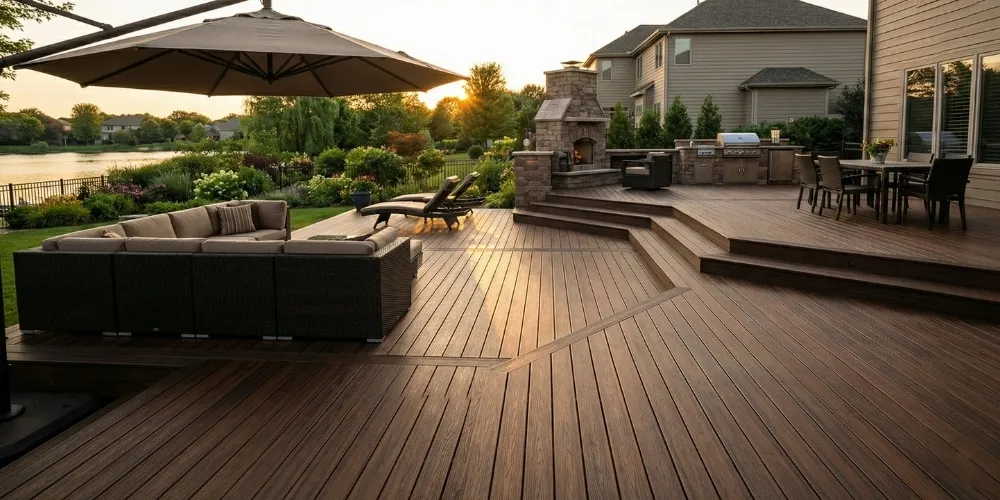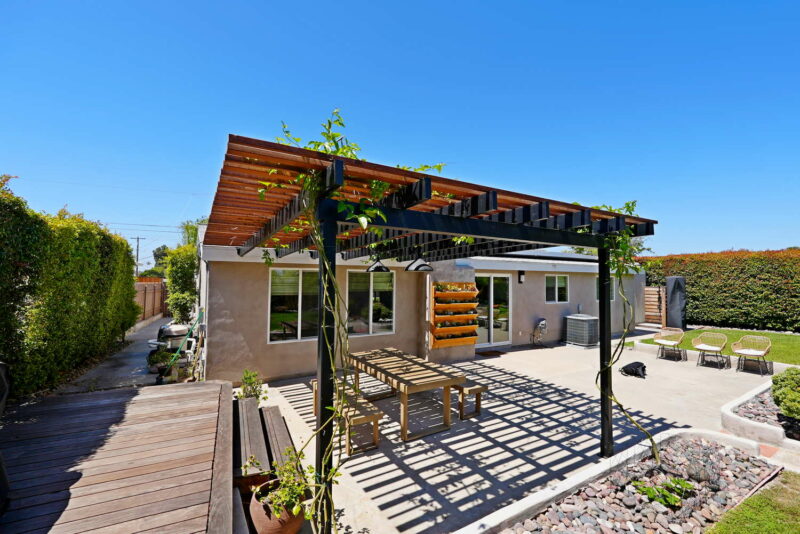
For most San Diego homes, a deck adds more value than a patio, especially on the hillside and canyon lots that define neighborhoods from Mission Hills to La Jolla. A ground-level concrete patio can win on a flat, sunny backyard where the budget is tight. But when your lot slopes, when there is a view to chase, or when resale is on your mind, a well-built deck is the stronger investment. This guide breaks down the real numbers on deck vs patio cost, resale, maintenance, and which one fits your specific San Diego lot, so you can decide with confidence and, if a deck is the answer, plan a professional deck installation the right way.
The quick verdict: deck vs patio at a glance
If you want the short answer before the details, here is how the two options stack up for a typical San Diego home. A patio is cheaper upfront and nearly maintenance-free. A deck costs more but usually returns more at resale and solves problems a patio simply cannot, like turning a steep drop-off into flat, usable square footage.
| Question | Deck | Patio |
|---|---|---|
| Lower upfront cost | No | Yes |
| Better on a sloped or canyon lot | Yes | No |
| Higher resale return | Usually | Sometimes |
| Lowest maintenance | No | Yes |
| Best for capturing a view | Yes | No |
| Fastest, simplest install | No | Yes |
The rest of this article explains why each answer lands where it does, and where the exceptions live. The deciding factor is almost always your lot, not the material.
What is a deck vs a patio, exactly?
The words get used loosely, so it helps to be precise. A deck is a raised, framed outdoor platform, usually built from wood or composite boards over a support structure of posts, beams, and joists. Because it stands on posts, a deck can float above uneven ground, hang off the back of a house, or step down a hillside in tiers.
A patio sits directly on the ground. It is a paved surface, most often poured concrete, and sometimes pavers, brick, flagstone, or stamped concrete. Because it rests on grade, a patio needs a reasonably flat, stable base to work well.
That single structural difference, raised on posts versus resting on the ground, drives nearly every other tradeoff in this comparison. Keep it in mind as we go.
Deck vs patio cost: what you actually pay
Cost is where a patio looks most attractive on paper. A basic poured concrete patio in San Diego runs roughly $10 to $20 per square foot. A deck costs more because it is a framed structure with footings, railings, and skilled labor. Here is a realistic 2026 breakdown.
| Option | Typical cost per sq ft | Expected lifespan | Best for |
|---|---|---|---|
| Concrete patio | $10–$20 | 25–40 years | Flat lots, tight budgets |
| Paver / stone patio | $18–$35 | 30–50 years | Flat lots, upscale look |
| Pressure-treated wood deck | $30–$45 | 15–25 years | Budget-conscious raised builds |
| Composite / Trex deck | $45–$70 | 30+ years | Low-maintenance, coastal, long-term |
The deck vs concrete patio gap is real, but read the lifespan column next to it. A composite deck costs more per square foot than concrete, yet it can outlast a wood deck by a decade or more with almost no upkeep. For a precise figure on your project, run the numbers with our deck cost calculator or read our full breakdown of the cost to build a deck in San Diego.
One thing homeowners forget: on a sloped lot, that cheap patio number evaporates. Leveling a hillside with retaining walls, grading, and fill to create a flat pad for concrete can cost more than simply building a deck over the slope. The patio is only cheap when the ground is already flat.
Resale value and ROI: which adds more value, deck or patio?
This is the headline question, and the data favors the deck. Remodeling cost-versus-value studies have tracked wood and composite deck additions for years, and both routinely recoup a strong share of their cost at resale, often in the 60 to 75 percent range nationally and higher in outdoor-living markets like Southern California.
A patio adds value too, but it tends to read as a nice feature rather than a headline selling point. A deck, especially one that captures a canyon view or expands a cramped backyard, shows up in listing photos and walk-throughs as genuine added living space. In a strong San Diego market, usable outdoor square footage is something buyers pay a premium for. We cover the full picture in our guide to whether a deck adds value.
The concept here is simple return on investment: you want the dollars you spend to come back when you sell. A deck that turns a useless slope into an entertaining space creates value that did not exist before. A patio on already-flat ground improves what was already usable. The former moves the needle more.
The San Diego difference: sloped and canyon lots
This is where the deck vs patio debate stops being close. So much of San Diego is built on canyon rims and hillsides: think Del Cerro, Talmadge, Point Loma, the finger canyons off Adams Avenue, the steep streets above Mission Valley. On these lots, the backyard often drops away sharply just past the house.
A patio cannot follow that terrain. To pour concrete on a slope, you first have to create flat ground, which means retaining walls, engineered fill, and drainage, all expensive and all eating into the yard. A deck does the opposite. It reaches out over the slope on posts and gives you a flat, usable platform exactly where you had nothing before.
That is the core San Diego argument for a deck: it manufactures square footage. A multi-level deck can step down a hillside in stages, creating a dining level, a lounge level, and a stair path into the yard below. For lots that fall away fast, a ground-level deck near the house can transition into a raised section as the grade drops. A patio has no answer for any of this.
There is a view bonus, too. Raising your outdoor space even a few feet on a canyon lot can lift your sightline over the fence and open up the view you bought the house for. Concrete on the ground keeps you looking at the fence.
Maintenance and durability: salt air, sun, and heat
Here the patio earns its keep. Concrete asks for almost nothing: an occasional rinse, a reseal every few years for stamped or colored surfaces, and it shrugs off sun and heat without fading or warping. If zero maintenance is your top priority and your lot is flat, that is a legitimate reason to choose a patio.
Decks need more attention, and the amount depends heavily on material and location. Near the coast, in La Jolla, Coronado, Ocean Beach, and Encinitas, salt air is hard on fasteners and finishes. That environment is the strongest case for composite or Trex decking, which does not rot, splinter, or need annual sealing the way wood does. Inland, in the summer heat of Santee, El Cajon, or Escondido, board color and heat retention matter more, and material choice shifts again.
If you love the warmth of real wood, a redwood deck is a San Diego classic, but budget for regular sealing to fight sun and moisture. Whatever you choose, coastal decks benefit from proper deck waterproofing and a sensible maintenance plan to hit that 30-year lifespan instead of failing early.
- Coastal (La Jolla, Coronado, Encinitas): favor composite for salt-air resistance
- Inland heat (Santee, El Cajon): mind board color and heat retention
- Wood lovers anywhere: plan on sealing every 1–2 years
- Patio: lowest maintenance of any option, flat lots only
Permits and HOA rules in San Diego
Paperwork differs between the two, and it can tip a close decision. A ground-level concrete patio under a certain size often needs little or no permit. A raised deck almost always requires a building permit, and the higher off the ground it sits, the more the city cares about footings, railings, and structural details.
That is not a reason to avoid a deck. It is a reason to build with someone who handles San Diego permitting routinely, sizes the footings correctly, and meets code for railing height and load. A permitted, inspected deck protects your resale value; an un-permitted one becomes a problem the moment a buyer's inspector shows up.
HOAs add another layer. Many San Diego communities, from Carmel Valley to Scripps Ranch, have design guidelines covering railing style, deck height, materials, and color. Check your CC&Rs before you fall in love with a design, and factor approval time into your schedule.
When a patio is the better choice
An honest comparison has to say it plainly: sometimes the patio wins. Choose a patio when the following describe your situation.
- Your backyard is already flat and level, so a patio needs no retaining or grading
- Your budget is tight and you want the most square footage per dollar right now
- You want the lowest possible maintenance and never want to seal or reseal a surface
- You are building at ground level anyway, with no view to capture and no slope to solve
- You want an outdoor kitchen or fire feature with a heavy, permanent footing that sits best on a slab
If most of those apply to you, do not let anyone talk you into a deck you do not need. A patio is the right call for plenty of flat San Diego lots, and pretending otherwise would be dishonest.
The best answer for many homes: combine both
The deck-or-patio framing assumes you have to pick one. On a lot with both flat and sloped areas, the smartest design often uses each where it works best. Pour a patio on the flat pad near the house for the grill and dining table, then run a deck out over the slope where the ground falls away, connected by a step or two.
You can blend comfort features into a deck too. A covered deck, essentially a patio cover built over your deck, gives you shade for those long inland summer afternoons while keeping the raised platform that solves the slope. A railing with cable or glass infill keeps a canyon view open. Near a pool, a pool deck ties the water to the house without the glare and cracking of a big concrete slab.
A thoughtful custom deck design can weave a deck and a patio into one flowing outdoor room, so you get the maintenance-free slab where you want it and the raised, view-capturing deck where the lot demands it.
How to decide: a simple checklist
Walk your yard and answer these questions honestly. Your lot will usually make the decision for you.
- Is the ground flat, or does it slope or drop off? Slope points to a deck.
- Is there a view worth raising your sightline for? A view points to a deck.
- Is upfront cost or long-term value your priority? Cost leans patio, value leans deck.
- How much maintenance are you willing to do? None points to a patio or composite deck.
- Are you selling within a few years? Strong resale points to a deck.
- Do you have both flat and sloped areas? Consider combining both.
For a flat lot on a tight budget with no view, a patio is a fine, sensible choice. For a canyon or hillside lot, a home you want to sell well, or a view you want to capture, the deck is the stronger investment nearly every time. When the answer is a deck, the material and design matter as much as the decision itself, so read up on the best decking material for San Diego before you commit.
Quick Answers
Does a deck or a patio add more value to a home in San Diego?
A deck usually adds more value, especially on sloped or view lots. Decks tend to recoup a strong share of their cost at resale and create usable living space that patios on flat ground cannot match. On a large, flat backyard, a patio can still be a smart, cost-effective choice.
Is a deck cheaper than a concrete patio?
No, a deck almost always costs more per square foot upfront. Concrete runs roughly $10 to $20 per square foot versus $30 to $70 for a deck. But on a sloped lot, the cost of leveling ground for a patio can erase that gap and make a deck the better buy.
Which lasts longer, a deck or a patio?
A concrete patio typically lasts longest, but composite decks close the gap. Concrete can last 25 to 40 years with little care. A composite or Trex deck lasts 30-plus years with minimal maintenance, while a wood deck runs 15 to 25 years depending on upkeep and exposure.
What is better for a hillside or canyon lot in San Diego?
A deck is far better for sloped and canyon lots. A raised deck reaches out over the slope on posts and creates flat, usable space where a patio would require expensive retaining walls and grading. This is the single biggest reason San Diego homeowners choose decks.
Do I need a permit for a deck or a patio?
Raised decks almost always need a permit; small ground-level patios often do not. San Diego requires building permits for most raised decks, covering footings and railings. Check your HOA CC&Rs too, since many communities regulate deck height, materials, and railing style.
Can I have both a deck and a patio?
Yes, and on many lots it is the best solution. Use a patio on the flat area near the house and a deck over the slope, connected by a step or two. A custom design can blend the two into one outdoor room.
Skip the online guesses. We measure and price your project for free.
Get a Free Estimate