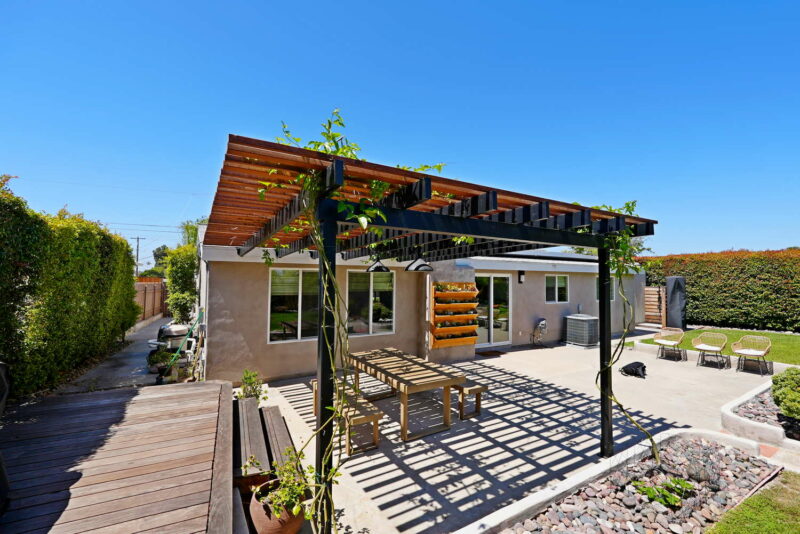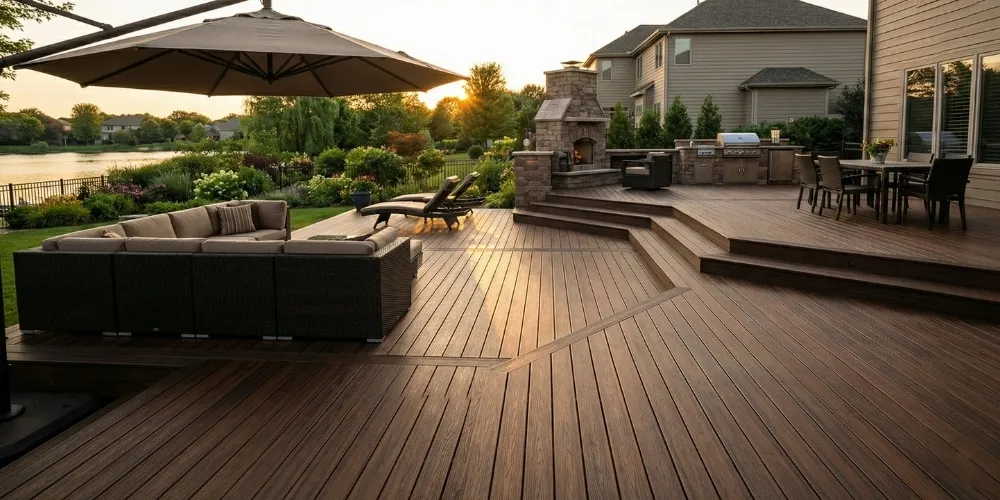
Yes, a deck adds real value to your home, and in San Diego it pays back well. A well-built deck typically returns 50% to 80% of its cost at resale, and in the right neighborhood or on a view lot that number climbs higher. The return shows up twice: once in your appraisal and sale price, and again every evening you spend outside instead of paying for it later. Below are the actual ROI numbers by deck type, why San Diego decks outperform the national averages, and the specific choices that decide whether your deck earns its money back.
How Much Value Does a Deck Add to a House?
National remodeling data has tracked deck returns for years, and the pattern holds up. A pressure-treated wood deck recovers roughly 65% to 80% of its cost at resale, while a composite deck lands closer to 55% to 68% because it costs more up front. Those are national averages. San Diego sits above them because outdoor square footage is usable twelve months a year here, and buyers pay for that.
Here is how the common deck types compare on typical return on investment, based on remodeling cost-versus-value reporting adjusted for the Southern California market:
| Deck Type / Material | Typical ROI % | Notes |
|---|---|---|
| Pressure-treated wood deck | 65% - 80% | Lowest cost, highest raw ROI, needs upkeep |
| Redwood deck | 60% - 75% | Local favorite, warm look, moderate maintenance |
| Composite deck (Trex, TimberTech) | 55% - 68% | Higher cost, low maintenance, strong buyer appeal |
| Covered / roofed deck | 60% - 75% | Adds shaded living space, reads as a room |
| Multi-level or view deck | 70% - 90%+ | Unlocks canyon or ocean views, premium in SD |
The spread is wide because ROI is not fixed. Two identical decks can return very different amounts depending on the neighborhood, the view, the permit paperwork, and the condition at sale. The rest of this post covers what moves your number up or down.
Wood vs. Composite: Which Adds More Value?
On paper, wood wins the ROI percentage because it costs less to build, so a smaller investment recovers a larger share. A pressure-treated or redwood deck can post 70%-plus returns. But that percentage assumes the wood is in good shape at sale, and wood only stays in good shape if someone stains and seals it every couple of years.
Composite tells a different story. A composite deck costs more up front, so the percentage looks lower, but the total dollars recovered are often similar and the deck shows better at sale. A Trex deck that has not been touched in five years still looks new to a buyer walking the backyard, and buyers pay for what they can see. If you plan to sell within a few years, composite protects the appearance that drives the offer.
We break the full cost and lifespan tradeoff down in our guide to the best decking material for San Diego. The short version: wood wins the ROI math on a spreadsheet, composite wins the showing.
Why Decks Pay Off Better in San Diego
The national ROI figures come from markets where a deck sits unused half the year under snow or humidity. San Diego does not have that problem. From La Mesa to Encinitas to Chula Vista, a deck is functional living space every month, and that shifts how buyers value it.
- Year-round outdoor living means a deck reads as an extra room, not a seasonal extra. Buyers price it like square footage.
- View lots in Point Loma, La Jolla, and the canyon neighborhoods around Mission Hills gain the most. A deck that lifts the entertaining area to catch an ocean or canyon view can add value far beyond its build cost.
- Canyon and hillside lots all over San Diego have unusable slope. A deck converts that dead space into flat, livable area, which is some of the highest-value space a deck can add.
- A strong resale market means buyers are competing, and a finished outdoor space is a tiebreaker that pulls higher offers.
If your lot has a view or a slope, the ROI conversation changes completely. You are not just adding a deck, you are unlocking space and sightlines the house could not use before. That is why a multi-level deck on a canyon lot can return 90% or more.
Factors That Raise Your Deck's ROI
The difference between a 55% return and an 80% return usually comes down to a handful of choices made before the first board goes down.
- Permits. A permitted deck shows up in city records and survives escrow. An unpermitted one becomes a negotiation problem. More on this below.
- Build quality. Proper footings, correct joist spacing, and code-compliant railings hold their value. A cheap build ages fast and appraises low. Professional deck installation protects the return.
- Smart design. A deck sized and placed to flow from the kitchen or living room reads as part of the house. An awkward, disconnected deck reads as a project the buyer has to fix.
- Low maintenance. Composite and quality railings mean the deck still looks new at sale, which is when appearance turns into dollars.
- Matching the home. A deck whose scale and finish suit the house recovers more than one that feels bolted on.
Design is where most of the ROI is won or lost. Getting the layout right is what our custom deck design process is built around, so the deck fits the house, the lot, and the way buyers in your neighborhood actually live.
Factors That Hurt Your Home's Value
A deck can drag value down too. These are the situations that turn an asset into a liability at sale:
- Unpermitted work. Buyers and their agents ask for permits. Missing paperwork invites price cuts, repair demands, or a stalled escrow.
- Neglected wood. A gray, splintering, soft-in-spots wood deck reads as deferred maintenance and signals the buyer to worry about the rest of the house.
- Structural problems. Loose railings, wobbly stairs, or a deck pulling away from the house are safety red flags an inspector will flag.
- Over-building for the neighborhood. A $60,000 deck on a modest street will not appraise for $60,000. Match the investment to the comps.
- Poor placement. A deck that blocks light into the house or crowds a small yard can subtract value instead of adding it.
Most of these are avoidable. A tired old deck does not have to be a write-off either. A deck replacement turns a value-killer back into a value-adder, and a deck inspection tells you which camp your current deck falls into before you list.
Resale Value vs. Enjoyment Value
ROI percentages only measure the resale side. They miss the value you collect while you own the house. A deck that returns 65% at sale has still given you years of morning coffee, weekend dinners, and space for people to gather, none of which shows up in the appraisal.
For most San Diego homeowners, that enjoyment value is the real reason to build, and the resale return is the safety net that makes the decision easy. You are not betting the whole cost on resale, because you use the deck the entire time you live there. In a climate where the backyard is comfortable nearly every day, that daily-use value is worth more here than almost anywhere else in the country.
Does a Deck Help a Home Sell Faster?
Often, yes. A finished, move-in-ready outdoor space is a feature buyers can picture themselves using the day they get the keys. In listing photos, a clean deck staged with furniture gives the backyard a focal point and makes the whole home feel larger.
In a competitive San Diego market, that emotional pull matters. Two similar homes on the same street, and the one with a usable deck and a view often draws the faster, stronger offer. The deck does not just raise the price ceiling, it shortens the days on market. If you are weighing a deck against a hardscape patio for that appeal, our deck vs. patio comparison walks through how each one shows to buyers.
Permits, Appraisals, and Escrow
This is where deck value is quietly won or lost in San Diego. During a sale, the buyer's lender orders an appraisal, and the appraiser can only give credit for what is legal and documented. A permitted deck is on record with the city, so it counts. An unpermitted deck may be treated as if it does not exist, or worse, as a defect the seller has to resolve.
In escrow, buyers routinely request permit history. If your deck was built without one, expect a credit request, a demand to permit it after the fact, or a lower offer to cover the uncertainty. Pulling the proper permit at build time is cheap insurance that keeps the deck an asset instead of a bargaining chip. A reputable builder handles this as a standard part of the job, which is one of the things to check in our guide on how to choose a deck builder.
Best Value-Adding Deck Upgrades
Not every dollar spent on a deck returns the same. A few targeted upgrades punch above their cost for both resale and daily use:
- Quality railings. A clean deck railing in cable, metal, or glass makes the deck look finished and, on a view lot, keeps the sightline open. It is one of the most visible upgrades a buyer notices.
- Deck lighting. Low-voltage deck lighting on steps and rails extends usable hours into the evening and photographs beautifully for a listing.
- A covered section. A covered deck or pergola creates shaded, all-day living space and reads as an outdoor room, which appraises and shows stronger than open decking alone.
- A view-catching layout. On the right lot, raising or extending the deck to capture a canyon or ocean view is the single highest-return move available.
You do not need every upgrade. On a flat interior lot, railings and lighting carry most of the value. On a view or canyon lot, the layout and a covered section do the heavy lifting.
How to Maximize Your Deck ROI
Pulling it all together, here is how to make sure your deck earns its money back and then some:
- Permit the work. Non-negotiable if you plan to sell. It protects the appraisal and clears escrow.
- Match the investment to your comps. Build to the level of your neighborhood, not past it, unless a view justifies the premium.
- Choose the material for your timeline. Selling soon? Composite keeps its looks. Staying long term? Wood costs less and you get the enjoyment years.
- Design for flow. Connect the deck to the main living areas so it reads as part of the home.
- Add the visible upgrades. Railings and lighting return well and show well.
- Build it once, build it right. Quality construction is what holds value through the years and through inspection.
Want a number for your specific lot? Run the deck cost calculator for a fast estimate, read our full breakdown of the cost to build a deck in San Diego, or request a free quote and we will map out the design and the expected return for your home.
Quick Answers
Does a deck add value to your home?
Yes. A well-built, permitted deck typically returns 50% to 80% of its cost at resale, and more on San Diego view or canyon lots. On top of the resale return, you get years of usable outdoor living, which in San Diego's climate is value you collect every day you own the home.
How much value does a deck add to a house?
Most decks recover 55% to 80% of their build cost, and view or multi-level decks in San Diego can reach 90% or more. The exact figure depends on your neighborhood comps, whether the work is permitted, the material, and the condition of the deck at the time you sell.
Is a wood or composite deck a better investment?
Wood posts a higher ROI percentage because it costs less to build, but composite recovers similar total dollars and shows better at sale. If you are selling within a few years, composite protects the like-new appearance that drives offers. If you are staying long term, wood costs less and you enjoy it the whole time.
Does an unpermitted deck hurt my home's value?
Yes, an unpermitted deck can lower your value by inviting price cuts, repair demands, or a stalled escrow. Appraisers may not give credit for unpermitted work, and buyers routinely ask for permit history. Permitting the deck at build time keeps it an asset instead of a liability.
Does a deck help a home sell faster?
Often yes, because a finished, usable outdoor space is a feature buyers can picture using immediately and it strengthens listing photos. In San Diego's competitive market, a move-in-ready deck with a view frequently draws faster, stronger offers than a comparable home without one.
What deck upgrades add the most value?
Quality railings, low-voltage lighting, and a covered section deliver the strongest returns for both resale and daily use. On a view lot, a layout that captures the sightline is the single highest-return move. On a flat lot, railings and lighting carry most of the value.
Skip the online guesses. We measure and price your project for free.
Get a Free Estimate