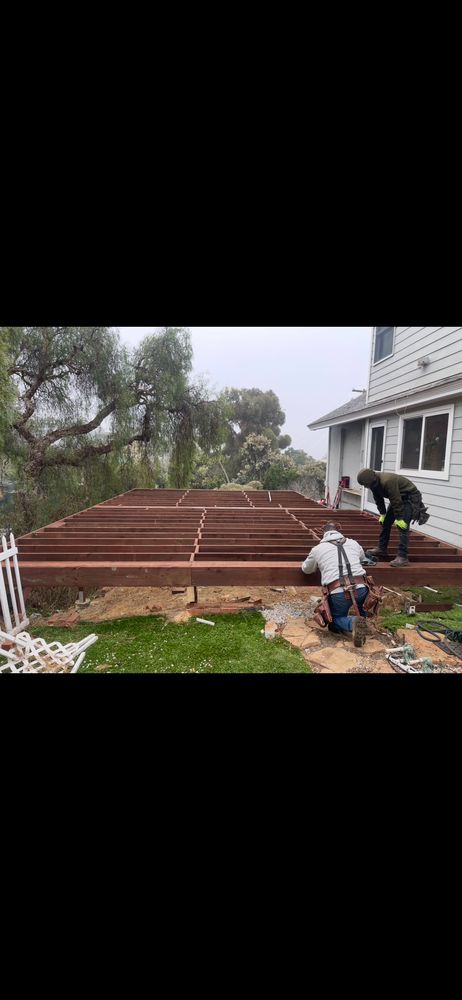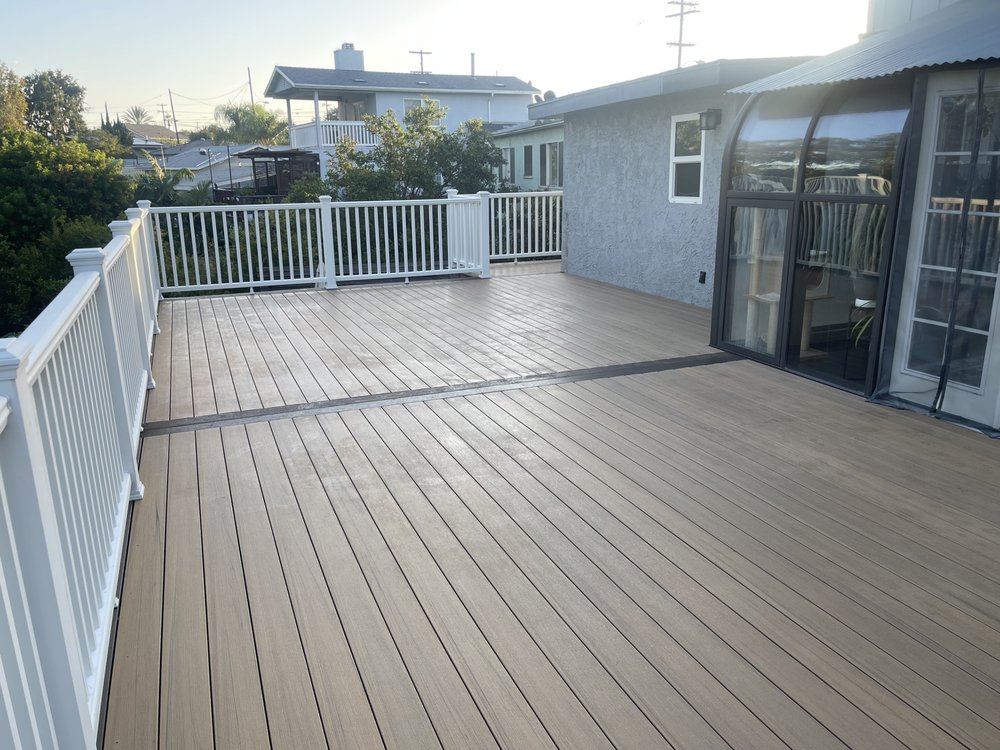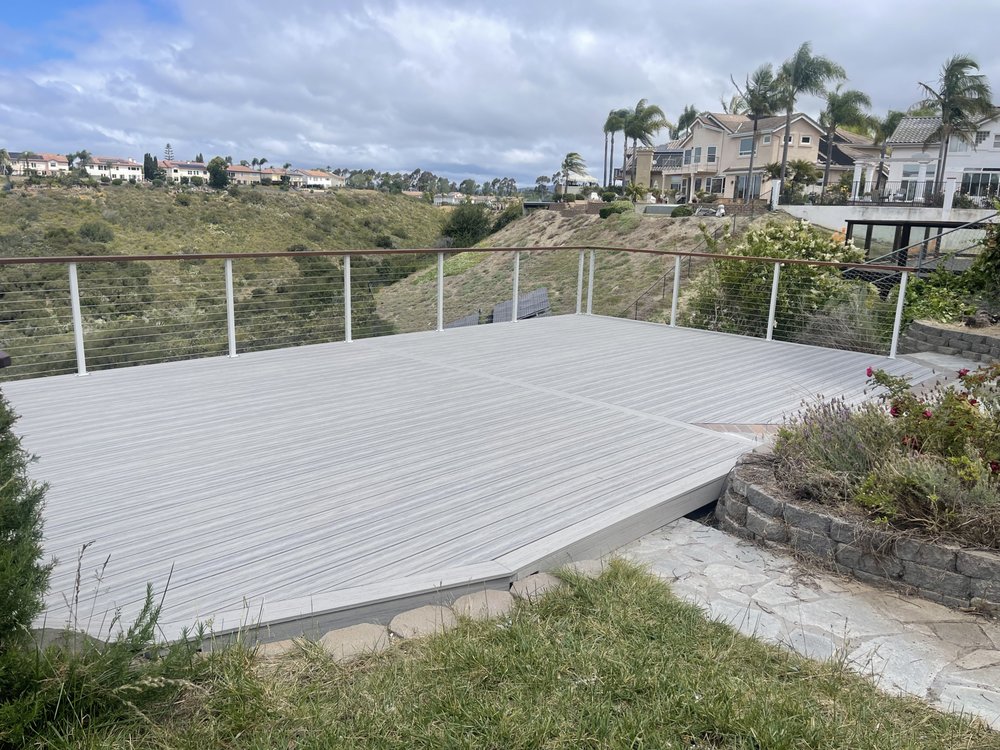
In San Diego's mapped fire hazard and wildland-urban interface (WUI) areas, new decks fall under California's Chapter 7A wildfire rules, which control the decking used within 10 feet of the house. That walking surface has to be noncombustible, ignition-resistant, exterior fire-retardant-treated wood, or a product that passed the state's decking fire tests.
Those are the core fire zone deck requirements San Diego homeowners run into, but the details depend on your parcel, which code edition your city enforces, and the product you pick. This guide separates what the code actually requires from good design advice that goes beyond it, so you know which is which.
Is Your Home in a Fire Hazard Zone?
Start here, because everything else depends on it. Chapter 7A applies to new construction in Fire Hazard Severity Zones and in WUI areas that a local agency designates.
The state fire marshal maps Fire Hazard Severity Zones, and those maps were updated in recent years for both state and local responsibility areas. Cities and the county then adopt the maps for their own jurisdictions. In practice, large parts of Ramona, Alpine, Julian, Jamul, Poway and Scripps Ranch are mapped, along with many canyon-edge neighborhoods inside the City of San Diego.
Check your own address on the Office of the State Fire Marshal hazard zone viewer, then confirm with your local building department. A neighborhood a few streets from open brush can be in a very high zone while the next ridge over is not.
What Chapter 7A Decking Rules Say
California's wildfire building rules live in Chapter 7A of the California Building Code, with matching provisions in Section R337 of the California Residential Code. The decking section applies to the walking surface of decks, porches, balconies and stairs within 10 feet of the building.
Within that 10-foot band, the code gives several ways to comply:
| Compliance path | What it means | Common examples |
|---|---|---|
| Noncombustible material | The material does not burn | Aluminum decking, concrete, tile on a noncombustible base |
| Ignition-resistant material | Passes an extended flame-spread test | Certain listed composite, PVC and hardwood products |
| Fire-retardant-treated wood | Wood treated and labeled for exterior use | Exterior FRT lumber, not interior-grade FRT |
| Tested decking product | Passes the state's under-deck flame and burning-brand tests (SFM Standard 12-7A-4) | Many composite and PVC lines publish these listings |
The exact wording and test references shift between code editions. California adopts a new edition every three years, and the 2025 codes took effect on January 1, 2026. Ask your building department which edition applies to your permit date, and read the decking section of that edition before you choose a board.
Ignition-Resistant Decking in California: Reading a Listing
Here is the part that trips people up. Compliance is tied to a specific tested product, not to a brand or a material category. One composite line from a manufacturer can be listed for WUI use while another line from the same company is not.
The Office of the State Fire Marshal runs a Building Materials Listing program for WUI products, and manufacturers publish their own test reports and compliance sheets. Before you order, find the listing or report for the exact product line, profile and thickness you plan to install, and attach it to your plan set. Plan checkers and inspectors in fire zones see this every week and will ask for it.
The code sets the decking rule within 10 feet of the building. Everything about ember-resistant design further out, like clearing under the deck or choosing metal railings, is strong advice, not a code requirement, unless your city or HOA adds it.
How Materials Compare in a Fire Zone
This table is general guidance on how each material behaves. Whether a specific product meets the code depends on its listing.
| Material | Fire behavior | WUI notes |
|---|---|---|
| Aluminum | Noncombustible | Meets the noncombustible path; check framing and fasteners too |
| Capped composite | Combustible, varies by product | Many lines are tested and listed; confirm the exact line |
| PVC | Combustible, varies by product | Several lines carry WUI listings; check the report |
| IPE and dense hardwoods | Very dense, slow to ignite | Some species and products have ratings; ask for documentation |
| Redwood, cedar, pressure-treated | Combustible | Not compliant within 10 feet on their own unless a listed treated product |
Material choice affects heat, maintenance and cost as well as fire. Our Trex vs TimberTech vs AZEK comparison covers those trade-offs for the three biggest composite brands.
Railings, Stairs and the Rest of the Deck
The decking rule focuses on the walking surface within 10 feet of the house. That includes stair treads and landings in that band, which people sometimes forget when they price a project. A compliant deck with non-compliant stair treads right next to the door can fail inspection.
Railings, framing and posts are treated differently from the walking surface, and the exact requirements depend on the code edition and your local amendments. Some jurisdictions in high-hazard areas add rules of their own for the underside of decks or for attached structures like pergolas. Ask your building department about the whole deck, not just the boards.
Attached patio covers, pergolas and shade structures can bring their own wildfire requirements as well. If you plan one, include it in the same permit discussion so the materials line up.
Repairs vs. Rebuilds in a Fire Zone
Replacing a few damaged boards on an existing deck usually counts as maintenance. Replacing most of the deck, or rebuilding it after a failure, is usually treated as new construction, and new construction has to meet the current wildfire rules.
Where that line falls depends on your jurisdiction and the scope of work, so ask before you start. If you are already replacing most of the surface, upgrading the whole deck to listed decking is often only a modest extra cost, and it avoids a mixed deck where half the boards meet the rules and half do not.
Insurance is a second reason to think about this. Some insurers in fire-prone parts of California now ask about home hardening features, and an ember-resistant deck can be part of that picture. Check with your own insurer rather than assuming a discount applies.
Ember-Resistant Design Beyond the Code
Studies of homes lost in California wildfires keep finding the same thing: embers, not the flame front, ignite most houses. A deck catches embers in its gaps and corners, and whatever is stored underneath becomes fuel. That is why the details around the deck matter as much as the boards.
- Keep the space under the deck clear. No firewood, cushions, lumber or dry leaves. Gravel or bare soil underneath beats bark mulch.
- Close off or screen the underside with noncombustible skirting or fine metal mesh, while keeping enough airflow to let the framing dry.
- Use metal flashing where the deck meets the house wall, so embers cannot lodge against the siding.
- Pick noncombustible railings, such as aluminum or steel, if budget allows.
- Clean the board gaps before fire season. Pine needles packed into gaps are a common ignition point.
- Keep planters and furniture with combustible cushions away from the house wall on high-wind days.
The state has also been developing "Zone 0" rules for the first five feet around homes in high hazard areas. Check the current status before you design a deck that touches the house, because those rules could affect what is allowed right next to the wall.
How to Check Your Deck Against the Fire Rules
- Look up your parcel's Fire Hazard Severity Zone and confirm with your city or the county whether WUI rules apply.
- Ask the building department which code edition applies to your permit, and read the decking section of Chapter 7A or R337 in that edition.
- Mark everything within 10 feet of the house on your plan: deck surface, stairs, landings and any walkway connecting them.
- Pick a decking product with a listing or test report that covers that exact line and profile.
- Add the listing, the product name and the compliance path to your plan set before you submit.
- Design the underside, flashing and railings for ember resistance, even where the code does not require it.
- After the build, keep the space under the deck clear and the board gaps clean every year before fire season.
If you want help with any of these steps, local deck builders in San Diego who work in fire zones regularly can usually tell you your parcel's status and the likely approved products in one visit.
Defensible Space Still Applies
California law requires defensible space around buildings in many fire-prone areas, up to 100 feet or to the property line. A deck is part of the house for that purpose, so the vegetation around and beneath it counts. Tall grass under a raised deck undoes much of the benefit of a listed board on top.
For the broader structural rules a deck plan has to meet, from footings to guards, see our California deck building code guide.
What Doesn't Work
- Buying "fire-resistant" boards based on marketing copy instead of a listing for the exact product.
- Using interior fire-retardant-treated lumber outdoors. The treatment leaches out and the protection fades.
- Choosing compliant decking, then storing firewood underneath.
- Assuming an old deck is grandfathered forever. A major rebuild is new construction and has to meet current rules.
In a fire zone, the board on top is only half the job. The other half is what you leave underneath it.
Quick Answers
What are the fire zone deck requirements in San Diego?
In mapped fire hazard and WUI areas, the decking surface within 10 feet of the house must be noncombustible, ignition-resistant, exterior fire-retardant-treated wood, or a product that passed the state's decking fire tests under Chapter 7A or CRC R337.
Is composite decking allowed in a WUI zone?
Often yes, if the specific product line is tested and listed for WUI use. Not every line from a brand qualifies, so check the listing for the exact product and profile before you buy.
What is Chapter 7A decking?
Chapter 7A is the wildfire section of the California Building Code. Its decking rule covers the walking surface of decks, porches, balconies and stairs within 10 feet of the building in fire hazard areas.
Do I have to replace my existing deck to meet WUI rules?
Usually not for a deck that is simply maintained. A new deck or a major rebuild must meet the code in effect when you pull the permit. Ask your building department where repair ends and rebuild begins for your project.
We confirm your parcel's zone, pick listed decking, and put the compliance details on the plans.
Get a Free Estimate