For most homeowners, Trex vs TimberTech comes down to tier, not brand: Trex is usually a little cheaper and easier to find, while TimberTech's mid and premium composite boards are capped on all four sides and often look more like real wood. At matching price points, both make durable, low-maintenance decks.
If you are weighing AZEK too, our three-way comparison of Trex vs TimberTech vs AZEK covers PVC and the bigger picture. This page stays on the two composite brands and the questions people ask most: cost, construction, heat, looks and what owners report after a few years.
The Short Version
| Trex | TimberTech composite | |
|---|---|---|
| Entry line | Enhance (Basics, Naturals) | Edge (Prime, Premier) |
| Mid line | Select | Pro Terrain |
| Premium lines | Transcend, Transcend Lineage | Pro Reserve, Pro Legacy |
| Capping | Shell on the exposed faces | Pro and Edge lines marketed as capped on four sides |
| Recycled content | About 95 percent, per Trex | Recycled content varies by line |
| Availability | Very wide, including big-box stores | Dealers, lumber yards and some big-box lines |
| Price at entry level | Slightly lower, typically | Close to Trex |
Product names and features as published by Trex and TimberTech as of late 2026. Lineups change, so confirm current details before ordering.
Trex vs TimberTech Cost
At the entry level, the two are close. Trex Enhance and TimberTech Edge are both built to hit a price, and the difference per board is usually small next to the cost of framing, railing and labor.
The gap opens in the middle. TimberTech's Pro collections often price above Trex Select, and they compete more with Trex Transcend. At the very top, Trex Transcend Lineage and TimberTech Pro Legacy sit near each other.
Prices also depend on local supply. In San Diego, Trex is easy to find at big-box stores and most lumber yards. TimberTech's premium lines come mostly through dealers, which can affect lead time for less common colors. For a rough sense of total project cost, see our guide to the cost to build a deck in San Diego.
How the Boards Are Built
Both brands make capped composite: a core of wood fiber and plastic, wrapped in a harder polymer cap that resists stains, fading and moisture.
The main construction difference is how much of the board the cap covers. TimberTech markets its Pro and Edge boards as capped on all four sides, including the bottom. Trex caps the faces that are exposed once the deck is built. In normal use, both shed spills and resist mold well. The four-sided cap is a selling point mainly for boards that might sit in contact with moisture from below, such as low decks with little airflow.
Some entry boards from both brands use a grooved, or scalloped, underside to save material and weight. That is fine on joists, but check the install guide before using those profiles for stair treads or fascia.
Looks and Texture
This is where many buyers end up deciding. Entry boards from both brands have a fairly uniform color and an embossed grain. They look like composite, and that is fine for many decks.
The premium lines are a different story. TimberTech's Pro Reserve and Legacy have deep, varied grain and multi-tone colors that many people find the most convincing wood look in composite. Trex Transcend Lineage aims at the same goal with a lighter, more modern palette.
Bring samples home. Colors shift a lot between catalog photos and real San Diego sun, and the "right" gray in a showroom can read blue or green on your deck.
Heat and Comfort
Both brands' boards get warm in direct sun, and color matters more than brand. Darker boards get hotter. Both companies advertise heat-mitigating technology on some lines, so if your deck faces west in an inland neighborhood, ask for those specific products and compare them side by side.
If heat is your top concern, PVC is usually cooler than either composite. That trade-off is covered in our guide to Trex vs AZEK.
TimberTech vs Trex Reviews: What Owners Report
Reading through owner reviews and contractor forums, a few patterns come up again and again. These are common reports, not test results, but they line up with what we see on jobs.
- Older composite issues no longer apply. Many complaints online describe first-generation, uncapped boards from the early 2000s, which faded and grew mold. Today's capped boards from both brands perform very differently.
- Entry lines show scratches more. Owners of entry boards from both brands report scuffs from furniture and pets more often than owners of premium lines.
- Color fade is mild and early. Both brands' boards lighten slightly in the first months of sun, then settle. Warranty claims for fading beyond that are uncommon in owner reports.
- Install quality matters more than brand. Many problems people blame on the board trace back to joist spacing, missing gaps or the wrong fasteners.
Installation Differences
On the framing side, the two brands ask for nearly the same thing. Most residential boards from both call for joists at 16 inches on center for straight runs, with closer spacing for diagonal or patterned layouts. The details that differ are in fastening and trim.
- Hidden fasteners. Each brand sells its own clip system for grooved boards. Stick with the matching system. Mixing them can leave uneven gaps and can affect warranty coverage.
- Face screws. Square-edge boards, used on borders and stairs, are face-screwed with color-matched screws from the same brand, which hide much better than generic deck screws.
- Fascia and risers. Both brands make thin fascia boards to cover the rim joist and stair risers. They need their own gap and fastener pattern because they move with temperature.
- Gapping. End and side gaps follow each brand's chart. The numbers are similar, but follow the chart for the board you actually bought.
A crew that installs both brands regularly will have the clips, screws and plugs on the truck. A crew that rarely installs one of them is more likely to improvise, which is where many "bad board" stories start.
Railings and Matching Trim
Both companies sell railing systems in composite and aluminum, plus post sleeves, caps and lighting. Matching the railing to the deck brand is not required, but it makes color matching easier and keeps the warranty paperwork in one place.
Near the coast, look closely at the railing hardware. Aluminum railings with a good powder coat hold up well in salt air, but brackets and screws should be the corrosion-resistant versions the maker specifies for coastal use.
A Worked Example
Picture a 300-square-foot deck in a Clairemont backyard, about two feet off the ground, with one set of steps and a simple railing on one side. The framing, footings, railing and labor are the same no matter which board goes on top.
Built with Trex Enhance or TimberTech Edge, the decking is a modest share of the total and the two quotes usually land close together. Move up to Trex Transcend or TimberTech Pro and the decking line grows noticeably, with TimberTech's Pro collections often a bit higher. The jump from entry to premium within either brand changes the total far more than switching brands at the same tier.
That is why the most useful quote shows the deck priced in two or three specific board lines on the same plan. Our deck cost calculator can give you a ballpark first.
Cleaning and Upkeep
Both brands need the same light care: sweep, rinse, and wash with mild soap and a soft brush a few times a year. Clear debris from the board gaps so water drains, especially under planters and along the house wall.
Avoid pressure washers set high or held close to the surface, since they can mark the cap. For grease spots from a grill, both companies publish cleaning guidance and list approved cleaners.
Which Lasts Longer?
Both brands' capped boards are built to last decades, and neither has a clear edge on lifespan at matching tiers. In practice, the frame underneath, the hardware and the installation decide how long a composite deck lasts far more than the logo on the board.
The board itself rarely fails outright. What wears is the surface: color, scratch resistance and how well it hides dirt. That is where premium lines from both brands pull ahead of entry lines, with tougher caps and more varied color that hides wear. If you want the deck to look newer for longer, step up a tier before you worry about switching brands.
Warranty
Both brands offer long limited warranties on structure, plus separate fade and stain warranties that get longer as you move up the product line. Premium lines from each carry the longest coverage. Labor coverage, transferability and commercial terms differ, so read the warranty for the exact line you are considering, and keep your receipt and installer details.
Trex or TimberTech: Which Is Better for You?
| If you want | Lean toward |
|---|---|
| The lowest price on a reliable composite deck | Trex Enhance |
| Easy matching boards for future repairs | Trex |
| A four-side capped board on a low, damp site | TimberTech Pro or Edge |
| The most realistic wood grain in composite | TimberTech Pro Reserve or Legacy |
| A clean, modern look in light colors | Trex Transcend Lineage |
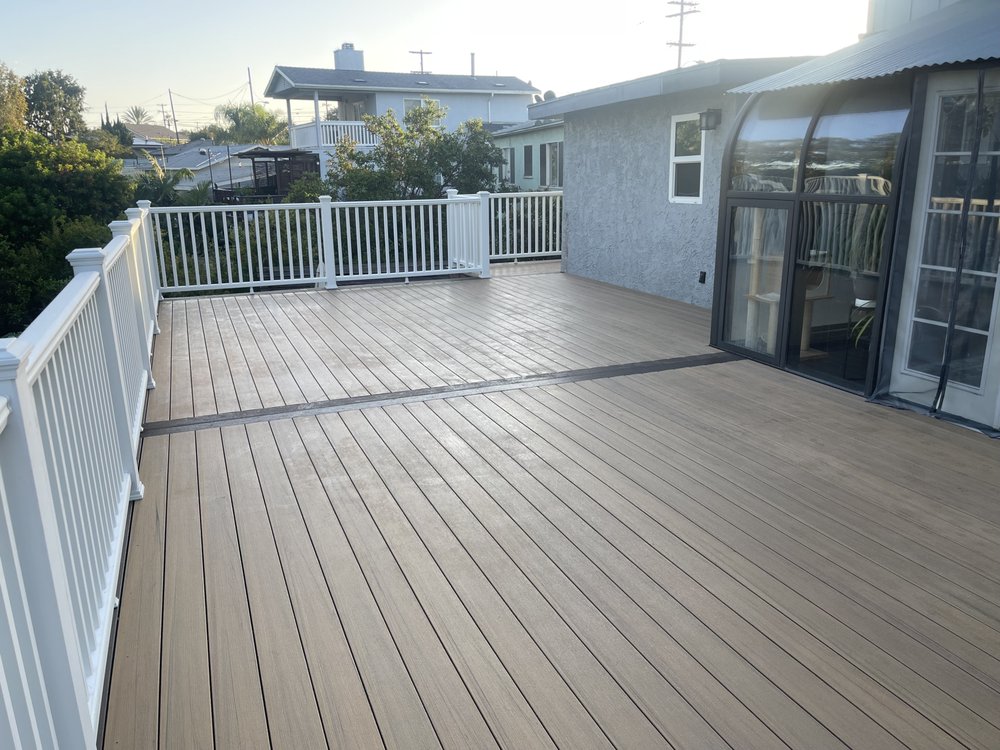
Our product pages for Trex decks and TimberTech decks show the colors we install most and what each looks like on a finished San Diego deck.
What Doesn't Work
- Comparing a premium board from one brand with an entry board from the other.
- Choosing by brand reputation alone without checking the specific line.
- Framing for wood spacing and then installing composite on it.
- Skipping the brand's own hidden fasteners, which can void parts of the warranty.
Pick the tier your budget allows, then let the samples in your own sun pick the brand.
Quick Answers
Is Trex or TimberTech better?
Neither is better in every case. Trex is usually a little cheaper and easier to find. TimberTech's composite boards are capped on four sides and its premium lines often look more like real wood. Compare matching tiers.
Which is cheaper, Trex or TimberTech?
At the entry level they are close, with Trex often slightly lower. In the mid range, TimberTech Pro usually costs more than Trex Select.
Does TimberTech get as hot as Trex?
Both get warm in direct sun, and color matters more than brand. Lighter colors and heat-mitigating lines from either brand stay more comfortable.
Do Trex and TimberTech fade?
Both lighten slightly in the first months of sun, then stabilize. Their fade and stain warranties cover changes beyond a set amount, with longer terms on premium lines.
We install both brands and will price your deck in each, line by line, so the choice is easy to see.
Get a Free Estimate