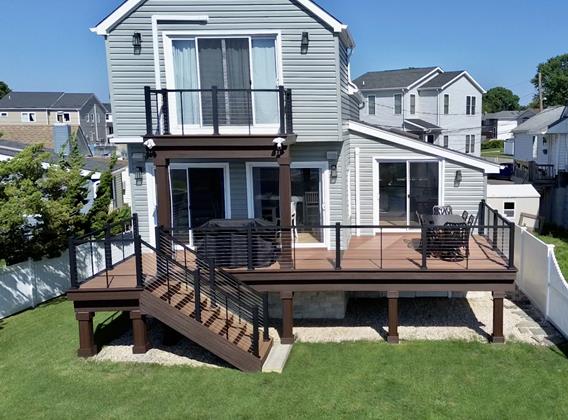
The code minimum guard height is 42 inches and seated eye level is 44 to 48, which is the single detail that decides whether you paid for a view or a fence.
San Diego Bayfair powerboat racing runs 18 to 20 September 2026 on Mission Bay. It fills every good roofline in the neighborhood, and it is the weekend bay-facing homeowners start pricing a viewing deck. On a bay lot the view is the entire budget justification, which makes three or four early decisions worth more than everything else combined.
The 42-Inch Problem
California requires a 42-inch guard on residential decks more than 30 inches above grade. That is six inches higher than the 36-inch guard used across much of the country, and it is not negotiable.
Now compare it to how people actually use a view deck:
- Seated eye level, average adult in a standard chair: 44 to 48 inches above the deck floor
- Standing eye level: 60 to 66 inches
A 42-inch guard therefore sits right at the bottom edge of a seated sightline. Anyone sitting down is looking through or at the top rail, not over it. Since the height cannot come down, the entire question becomes what the guard is made of.
One exception worth knowing: a deck less than 30 inches above grade needs no guard at all. On the flat lots in Mission Beach, a ground-level bay-facing deck is the one case where you get a completely unobstructed view for free. On the sloped lots in Bay Park and Crown Point, that option does not exist.
Railing Systems That Keep the Sightline
Cable rail
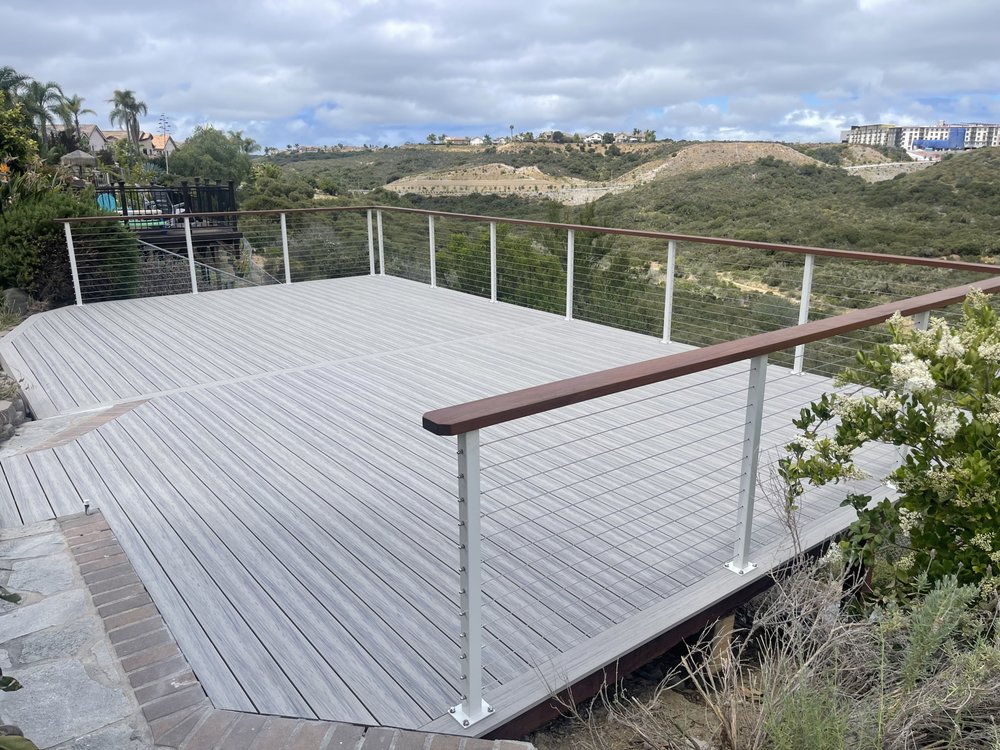
Horizontal 1/8 or 3/16 inch stainless cable, run at roughly 3-inch spacing so it still passes the 4-inch sphere rule when someone leans on it, with intermediate posts every 4 feet to hold tension. Obstructs around 10 percent of the view. Two things specific to this location: specify 316 stainless, not 304, because the bay is a chloride environment, and budget for one re-tensioning pass in the first year.
Glass panel
Tempered glass, effectively zero obstruction, and the only option here that also blocks wind — which matters on the west side of Crown Point where the afternoon onshore is constant. The cost is maintenance. Bay-adjacent glass films over with salt within a couple of weeks and needs rinsing on that cycle or it hazes permanently.
Traditional balusters
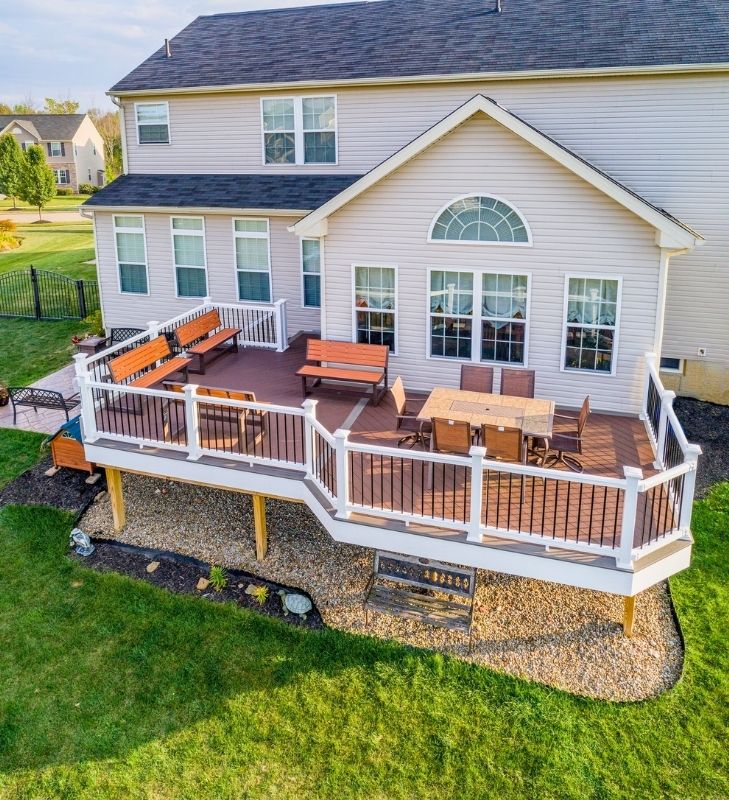
Cheapest, most maintenance-tolerant, and they block 30 to 40 percent of the horizontal view. Wrong on the view face, perfectly fine on the sides.
That last point is the practical answer for most budgets: balusters on the two side runs, cable or glass on the bay-facing run only. It cuts the premium by more than half while preserving the sightline you are actually paying for.
Full product-by-product comparison lives on the deck railing page. For linear footage and post counts on your specific deck, use the deck railing calculator.
Setbacks and Height Limits on Tight Bay Lots
Bay lots are small and the rules are tighter than inland.
Mission Beach lots are frequently 25 feet wide, which leaves very little between the house and the side setback line. Crown Point and Bay Park sit above the water on a grade, so the deck is elevated and the side yard setback controls how wide it can be before it needs to step in.
West of I-5, the Coastal Height Limit Overlay Zone caps structures at 30 feet. That is rarely an issue for a first-floor deck and it is frequently the deciding constraint on a rooftop or third-story viewing deck.
A deck cannot be pushed into a required side or rear yard just because that is where the water is. We measure setbacks and confirm the height envelope before drawing, because “we will shift it two feet” after plan check means a redraw and another review cycle.
Framing, footings and structural design for a raised build are covered on the elevated deck page — on a bluff lot that engineering is a stamped set, not a stock detail.
Orientation, Afternoon Sun and the Marine Layer
Bay-facing around Mission Bay generally means west or southwest. That is excellent from about 6pm and genuinely punishing between 2pm and 5pm from July through September, when there is nothing between your deck and the water to break the sun.
The marine layer works the other direction. Through May and June it often does not clear until midday or later, which makes an east-facing morning deck a poor investment on a bay lot for six weeks of the year.
Design the west face for the evening and leave it fully open, then put shade over the lounge zone set back from the rail. Covering the view face defeats the purpose of the build.
Salt exposure applies here too. Every fastener, hanger and post base on a bay-facing deck is in a corrosive environment, and the specification matters more than the price. That failure pattern is covered in salt air deck corrosion.
Why Plan Check Runs Longer on Bay-Facing Builds
Properties in Mission Beach, parts of Pacific Beach and along the Mission Bay Park edge sit inside the Coastal Overlay Zone, which can pull a Coastal Development Permit into a project that would otherwise be routine.
The timeline difference is real. A straightforward inland attached deck can clear over the counter in about a week. A coastal-overlay or hillside project runs 4 to 8 weeks, and adding elevated framing that needs stamped structural calculations puts you at the long end of that range.
The practical consequence: submit in September and you build in November. Submit in February and you spend the review window waiting out the rain, then join the spring queue.
Neighborhood by Neighborhood
Mission Beach. Dense, narrow, flat. Decks go up rather than out, which means the 30-foot height limit and the neighbor’s sightline both come into play early.
Pacific Beach. The widest range of lot conditions of any of these — flat blocks near the bay, sloped blocks toward Crown Point. See deck builder Pacific Beach for what we build there.
Crown Point. The best angles on the bay and the most wind. Glass earns its cost here more than anywhere else on this list.
Bay Park. Highest elevation and the longest views, on the steepest grade. Expect engineered footings and a longer review.
More San Diego Deck Updates
Seasonal notes, permit changes and build-window timing all live on the San Diego deck updates hub.